Friday, June 29, 2012

New Old News!


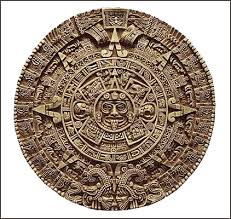
Mayan Calendar


Just in time for the growing furor about the "Doomsday" we have some new and interesting archaeological information coming out of Guatemala.


Unless you have been in hiding, you likely know that the world is batting around ungrounded rumors of the end of the world on 12/21/12. And if you have read this blog, you know I argue strongly that that idea is ridiculous. Well, in a delicious moment of "I told you so", the ancient Mayans left us a note indicating they did not intend that date as the end of the world.  Let's remember that we have just 2 VERY vaugue references to that date, and really just one with any weight at all. This in opposition to many indicators that the Mayans believed that the world would last long past that date.


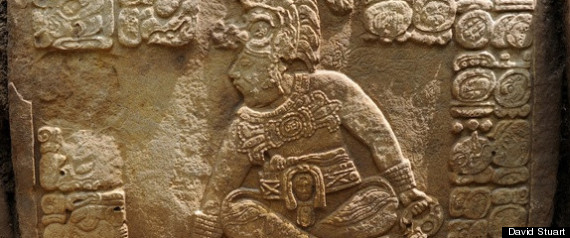
Now, archaeologists at  the Mayan ruins of La Corona in Guatemala have unearthed another  reference to the purported Doomsday date. On a stairway block carved with hieroglyphs, archaeologists found a commemoration of a visit by Yuknoom Yich'aak K'ahk' of Calakmul, the most powerful Mayan ruler in his day. The king, also known as Jaguar Paw, suffered a terrible defeat in battle by the Kingdom of Tikal in 695. So what did Jaguar Paw do after his defeat? Well he went on a publicity tour of course! And as part of that tour, he appears to have indicated that his reign would go on for eons into the future, specifically mentioning the 13th bak'tun of 12/21/12. (The reason may be that he reigned during the 13th k'atun, so he wanted that nice link of the 13 between the 2 cycles).


Marcello Canuto, the director of Tulane University Middle America Research Institute, said in a statement. "This text talks about ancient political history rather than prophecy," "This new evidence suggests that the 13 bak'tun date was an important calendrical date that would have been celebrated by the ancient Maya; however, they make no apocalyptic prophecies whatsoever regarding the date.What this text shows us is that in times of crisis, the ancient Maya used their calendar to promote continuity and stability rather than predict apocolypse"


This new calendar text was discovered just on June 28, 2012. La Corona has seen lots of looting over the centuries, but some stones with Mayan writings on them were cast aside by the robbers. This new discovery just adds to the large body of evidence that Doomsday is a date to sell books, and be provocative.


  J.T. Turner, Mayanist


Wednesday, May 30, 2012

Hey you have a bit more time!


Hello fellow Doomsday naysayers! I wanted to update you on new information about the so called Mayan Doomsday, December 21st, 2012.

As stated in earlier posts, there is much proof of the Mayans NEVER intending 12/21/12 as a doomsday. There are a few sources that show the calendar ending on that date, but as I have mentioned it is not intended to be the end of the world, more like an odometer flipping over to restart.

Now, in total support of my theory, it has been proven that it's scientifically safe to make plans for 2013. The world will not end on Dec. 21 or the default date of Dec. 23, according to a newly discovered Mayan calendar.

A team of scientists, led by archaeologist William Saturno of Boston University, has found the workshop of an ancient Mayan calendar maker, in the unexcavated Guatemalan city of Xultun.
In a small, relatively intact building, Saturno found extensive columns of figures, tracking the movements of the moon, Mars and Venus.
Each column was headed by a representation of one of the three moon gods -- a jaguar, a woman and a skull.
The calendar spans 7,000 years and we seem to be halfway through, meaning doomsday is still 3,500 years off.

"So much for the supposed end of the world," said Saturno.

So I hope your realize that the November elections actually do matter. :)


J.T. Turner Mayanist


Tuesday, August 23, 2011

Why The World Won't End On 12/21/12

OK, first let me declare I cannot guarantee that the world will not end on the so-called Mayan Doomsday. But let me set out the many reasons it is highly unlikely.

1) The Mayans never predicted it. I have talked to many Mayans, including village elders and spiritual leaders. None of them find any credence to the popular excitement about Doomsday. None. To quote one Mayan elder, "This is just something that a few people have latched onto as being true, when in fact it is not".

2) Yes, the calendar seems, at first glance, to end. But if you have read this blog, you know that all the various Mayan calendars are circular in nature. A circle, no beginning, and NO END. The Mayans just anticipate the calendar rolling over again. Think of a odometer in a car, eventually, all the numbers would reset at zero. Same thing with the calendar in 2012.

3) There is NO proof that the Mayans expected the world to end next year. There are two very vague references to it in some of the writings, but VERY vague, to the point where it could be a prediction, or lyrics to the My Little Pony song. (see my blog from last October, Primary Sources).

4) There are a few predictions of things that will happen after 12/21/12 in Mayan writings. For example, on the Tablet of Inscriptions at Palenque, there is a reference to a date in October of  the year 4772 ( our calendar). If the world is done next year, it makes no sense the Maya would reference dates after the Doomsday.

5) Let's keep in mind that the Mayan Calendar is a retrofit, they chose a date in the distant pass to start it. They could have chosen other dates, there was excellent math at science at work, but not perfect. Also we are still in the early phases of translation, our interpretations could be wrong. So to point at a specific date based on the calendar seems iffy at best.

6) Think about the recent prediction by a preacher that the world would end. Think about the Y2K buzz. Think about the year 2000 panic. We all heard the stories, it was major news. Surely if the Mayans knew the world would end on 12/21/12, it would have made a great impact on the writings we do have in our possession from when the Mayan Nation was at its peak. And as  stated, there just isn't the evidence around to support it.

Naturally, all of the above has not stopped people from writing books about Doomsday, predicting dire events, and playing on the sensational to make a few dollars. I find myself in the camp of others who suggest that instead of THE END, we consider what the Maya may have anticipated, A BEGINNING. Approach that date as a date for personal growth, renewal, rebirth if you like. But don't latch onto the false claims that it will all be over next year.


J.T. Turner, Mayanist

Thursday, July 7, 2011

The Long Count

Well we have had quite the tour of Mayan Calendars, but we wrap it up with this blog post. The Long Count is actually a simple idea. We simply pick a date in the distant past, and start counting the days since then. The start date is sometimes called the day of 'creation", but there does not seem to be any evidence the Mayans actually believed all creation started on that date. Rather it is just a way to keep time. Think of it rather as a starting point, like January 1st in the year 1 started the Gregorian Calendar.

Since we have a start date, we could make any date later after the start one big number. But the Mayans loved integrals of 20, and that is important to remember. Think of a cars odometer. Fresh from the factory we mights see it read 0.0.0.0.0. After it is driven for awile, it might read 6.5.4.1.2. This tell us that it has traveled 65,412 miles, or we can thing of it as 6 ten thousands, 5 thousands, 4 hundreds, 1 ten and 2 miles. So, chunks of 10's.


Well think of the Long Count as expressing the passage of time like that, but expressing it  in chunks of 1, 20, 360, 7,200 and 14,400.(More about the odd last two numbers later). So, in the Long Count, day 1 is 0.0.0.0.0. Day 2 is 0.0.0.0.1, and keeps going until the first slot hits 0.0.0.0.19. The next day, the Count is 0.0.0.1.0. The 1 tells us 20 days have passed. So a number like 0.0.0.11.14 tells us that 11 counts of 20, and 14 days have passed since the start.

OK now it gets tricky, (yeah, I know its already tricky, just stay with me). You see the second slot, rather than going to a maximum of 19, only goes to 17. (remember, we count the 0 as a day, so this reflects 18 days, though it says 17). This is so the third slot reflects almost a year, 360 days. So a number of 0.0.1.0.0 shows us 360 days have gone by. the next two slots show multiples of twenty, so if we look at the numkbers in order we see how many single days up to 19, how many 20 day sets up to 360, how many 360 day sets up to 7,200, (that is 20 X 360), and how many sets of 144,000 (20 X 7,200).

Each slot has a name, listed below.


Baktun Katun


Or we can put the name in the proper slot on our Mayan odometer:

Long Count Calendar


To break it down a bit more:


20 kins equal 1 uinal or 20 days
18 uinals equal 1 tun or 360 days
20 tuns equal 1 katun or 7,200 days
20 katuns equal 1 baktun or 144,000 days


Got all that? OK, now many scientists have tried to figure out just what start date this calendar used. There are several theories, but most scientists now lean to the ancient starting date of the Long Count as being August 14, 3114 BC, or to be politically correct, BCE (Before Common Era).But some say it was August 13, some August 11, and some September 6. These are supported by some astronomical events that the Long Count dates were given on artifacts.

Next time, why we will be fine on Doomsday!


J.T. Turner, Mayanist

Thursday, June 23, 2011

The Lords of the Night


OK so we have touched on the Tzolkin and Haab calendars. Before we get to the Long Count calendar, (which is the last one, aren't you glad?), let's touch upon the Lords of the Night.

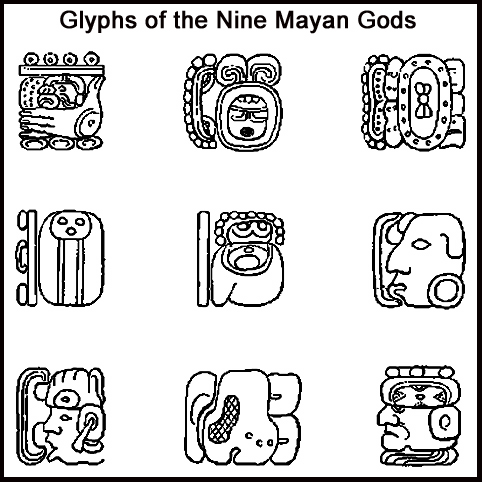
Simply, every day is associated with a creature known as a Lord of the Night. there are nine Lords, and they take turns watching over the days. You will recall the Mayans are all about cycles, so these nine Lords work in a rotation. Yes, that means we have yet another cycle in the Mayan time keeping world.

We do not have names for the Lords of the Night, those have been lost over the years. But we do have glyphs of each of them, and scholars simple have called them G1-G9. (Not to be confused with the Aztec Nine lords of the Night, which have names). Collectively they are known as bolon ti ku, "Nine of them".


Attractive, no? So the Lords of the night simply run in order for nine days and then restart.

And now we will wrap up our calendar discussion with the Long Count next blog.


                                           J.T. Turner
                                            Mayanist

Sunday, March 20, 2011

The Tzolkin Calendar

After a long hiatus, we are back to blogging! We are looking at the various Mayan calendars, their purpose and use. We took a look at the Haab, now lets consider the Tzolkin.

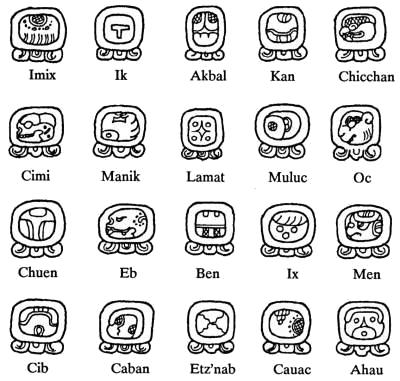
The Tzolkin is really two independant calendars that run side by side. the first cycle is  one of 13 days, numbered 1-13. The other cycle is 20 days, each day has a name of its own.( Think of our calendar, Monday Tuesday Wednesday, that is similar to the 20 day calendar). Each day, both the 13 day calendar and the 20 day calendat advance by one. If it were Monday March 5th, and we already knew it was march, we might say Monday the 5th or Monday 5. Then Tuesday 6, Wednesday 7 and so on. For the Mayans the number part went to 13 and restarted, the name of the day went thru the list of 20 and then restarts.

Hopefully you can count to 13, so you get that part of the calendar. We will call that part of the calendar tones. The names of days are below with the rough translation of the word.
  Imix-crocodile
 Ik-wind
 Akbal-night
Kan-seed
 Chikchan-sperpent
Kimi-transformation
Manik-deer
Lamat-star
Muluk-offering
Ok-dog
 Chuen-monkey
 Eb-road
 Ben-read
 Ix-jaguar
 Men-eagle
 Kib-wisdom
 Kaban-earth
 Etznab-flint
 Kawak-storm
 and Ahau- sun. 


Now lets get a quick visual as to how these two cycles work together.


Look at the tones, and you will see the Mayan representation for numbers we have discusses. One dot for one, two for two, etc. Then a bar represents 5, 2 bars is ten. Using those combinations, we see the inner circle that goes up to 13.


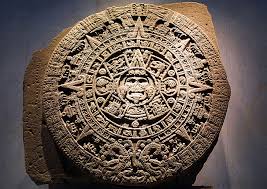
So if we started at 1 Imix, that would show the first number and the Name of the first day. It would then run through the cycle, with the numbers turning over at 13 and the names turning over after Ahau. If we continued on in that fashion, it would take 260 days for the calendar to get all the way back to the start of 1 Imix. In some illustrations, the days are called kin, so in the illustration above, we see the wheels for 260 kin or days.

OK so that is 2 major calendars out of the way. Before we get to the Long Count, we will visit a method or practice of the Mayans involving assigning a creature to each day. So, next up, Lord of the Night!


J.T. Turner, Mayanist

Wednesday, November 24, 2010

Haab Calendar

So when last we met our intrepid Mayanist, he was explaining calendars. Recall that we have a calendar that is composed of separate components that work together, namely days of the week which run in a cycle, and dates which run in a separate cycle. The Mayans also had calendars that ran independently. I mentioned we would look at the Haab, Tzolkin and the Long Count calendars. First up, Haab.


The Haab calendar is very close to our Gregorian calendar. It has 18 months instead of 12, and 20 days per month. That leaves us about 5 days short of a full solar year. So the Mayans throw 5 "free days" into the last month. (By the way these 5 extra days were considered bad luck, and no Mayans would normally work nor wed during them). So this calendar now matches a solar year of the earth. The month names, while not critical to us are too much fun to pass up. Pop, Wo, Zip, Zotz, Zek, Xul,Yaxkin,Mol, Chen, Yax, Zak,Keh,Mak, Kankin,Muan, Pax, Kayab, and Kumku. (I am using common spelling, that differs a bit from the labels on the sample below.) And remember those 5 extra days at the end of the last month? We call them, Wayeb.


In the Haab calendar, each day is noted by giving the day and month. So the first day of the first month is 0 Pop, followed by 1 Pop, 2 Pop, etc. all the way to 19 Pop, which is then followed by 0 Wo, 1 Wo, 2 Wo and so on.

The Mayans didn't really track of how many Haabs rolled by, they used the Long Calendar for calculations like that.

Next up, Tzolkin!


J.T. Turner, Mayanist

Friday, October 15, 2010

Calendars Galore!


I have spoken of the Mayan calendars in several posts here,but thought a good recap was in order.

First, remember there is more than one Mayan Calendar. There are several, and sometimes they were used side by side. Imagine having 3,4,5 calendars all clicking off time independently of the each other!

For our purposes we often compare the Mayan calendar with the Gregorian calendar that is in use in much of the world. Both the Mayan and Gregorian calendars are tied to the idea of cycles, or simply a sequence that happens over and over.The Mayans used many celestial events in their calendars, as they saw movements in the sky as recurring.The Gregorian calendar uses the cycle of a week, Monday through Sunday, over and over, We also use 12 months, with days within a month. But the days of the week, and the Months/date run interdependently of each other. Say we have a Monday, January1. Tuesday January2, Wednesday January 3 and so on. When we get to Sunday, the next day the week starts over, but the date keeps counting, independently. With me so far? Good!

Mayan calendars also have independent components.running at the same time, just more of them. 3 are considered the most common. Our next few blogs will take on each of them:

Haab- 365 day calendar (18 months long each month 20 days, with 5 days added to the last month to make a solar year).
Tzolkin- 265 day calendar (actually 2 calenders, running side by side).

 These above two calendars can be combined, and are referred to as the Calendar Round, which has a cycle of 52 years.
Long Count-Just a way of writing the number of days that have gone by since a particular event, thousands of years ago.

Next up, a look at each of the three calendars listed above.


J.T. Turner, Mayanist

Friday, October 1, 2010

Primary sources

Hello! And sorry for the gap in posts!


In historical research, Primary Sources are of critical importance. They are the documents or items that originate a piece of history. Think of the Declaration of Independence. How do you know that the copy you find on the internet is right? Well, go have a look at the original, the primary source.

Last time in this blog, I mentioned just a few primary sources that actually mention the Doomsday date of the Mayan calendar. We spoke about the Jaguar Prophet, and how that passage is murky at best. Another primary source for the Doomsday date is located in southern Tabasco Mexico, at the Tortuguero site. The site dates to the 7th century CE, and has a series of inscriptions for a ruler there at that time. For us, we are interested in Monument 6, which does indeed refer to the b'ak'tun 13 (doomsday). Sadly, part of the inscription has been defaced, so we have just a partial rendering. Mark Van Stone has given the most complete translation:
Tzuhtz-(a)j-oom u(y)-uxlajuun pik
The Thirteenth [b'ak'tun] will end
(ta) Chan Ajaw ux(-te') Uniiw.
(on) 4 Ajaw, the 3rd of Uniiw [3 K'ank'in].
Uht-oom Ek'-...
Black ...[illegible]...will occur.
Y-em(al)...Bolon Yookte' K'uh ta-chak-ma...
(It will be) the descent(?) of Bolon Yokte' K'uh to the great (or "red"?)...[illegible]...[22]
We really know little about the god,  Bolon Yokte' K'uh.He is elsewhere mentioned as a god of war, conflict, and the underworld. In some stela, he is portrayed with a rope around his neck, or an incense bag, which some take to mean his being a sacrifice, specifically a sacrifice to end a time period. (OK that would support the 2012/World Ending camp). But I have to point out that the translation is far from complete, and that Bolon Yokte' K"uh was already and ancient god when the Tortuguero site was active, and he appears to have been an unfamilar god even then. Just look at line 3. Black...something....will occur. Black death? Black Night? Black Sabbath? Black is the color of my true loves hair? Could be anything!

So to recap, most of the furor around 2012 is created simply by modern interpretation of the Long Count Calendar, with many authorities  disagreeing on the nature of the end date. And as discussed in the last 2 posts, there is little or no primary source material that points to 12/21/12 as a doomsday. Surely if that is the end of the world, the Mayans, who were great predictors of events, would have left more indicators of that ultimate event!


J.T. TURNER
MAYANIST

Sunday, August 1, 2010

Jaguar Prophets


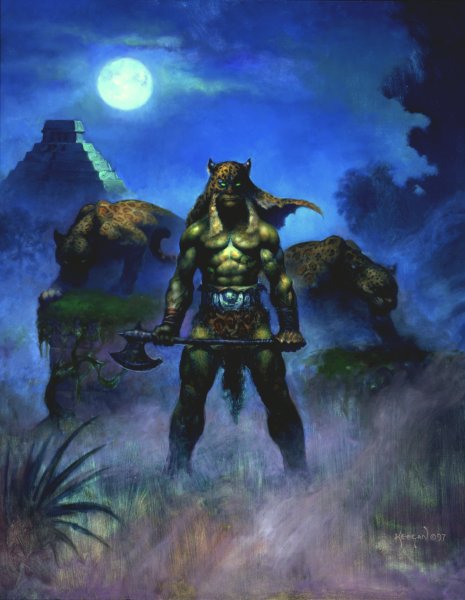
OK, OK, I know this is a rather dramatic picture above, and it is not really the Jaguar Prophet I mention in this post, but I liked it! It is called Jaguar Moon, and I am using it.

Despite all the hurly burly that surrounds the supposed doomsday of 12/21/12, if we look at factual Mayan sources, there are only a couple that even mention it.  The end of the Long Count calendar is mostly a non-event to ancient and contemporary Mayans. Let us look at a few source materials that do mention the date.

There is a group of prophecies that were made after the Spanish conquest of the Mayans that were translated to a sort of abbreviated Spanish.These prophesies were given by Chilam Balam, or the Jaguar Prophet. I have to say there is a lot of argument over the translations and meanings of the passages in the documents. But one passage does indeed mention the 13th b'ak'tun, which is the doomsday date. I won't reproduce the passage here, as few of you read ancient Mayan, (;)) but an archeaoastronomer, Maud Worcester Makenson, has translated the passage to mean the following :


"Presently B'ak'tun 13 shall come sailing, figuratively speaking, bringing the ornaments of which I have spoken from your ancestors.........Then the god will come to visit his little ones. Perhaps 'After Death' will be the subject of his discourse."
As you can see, that translation can easily be manipulated by Doomsday theorists into talking about the end of the world. But more recent translations suggest that the Doomsday date is not even mentioned in the prophecies. Another translator takes the passage to mean:


.                      "...like the coming of 13 sail-ships. When the captains dress themselves, your fathers will be taken".

Again if I want to read Doomsday into this I could. But more likely it could have referred to the Spanish conquest of the Mayans. Or it could be the lyrics to a David Bowie song .

I mention this just to show how source texts can easily be corrupted by sensationalists for their own purposes. Next post we will look at another source for the widespread doomsday theory. 


J.T. Turner
Mayanist

Thursday, July 15, 2010

Solar storms and 2012


Hello loyal readers! One of the many predictions about 2012 and the so called Doomsday deals with fire. This ties in with predictions about the type of cataclysm that occurs or I should say recurs in the Mayan calendar. But let us separate fact from fiction. Not to support a World's End theory, it does seem we will have increasing impact in our lives of solar storms, spots and flare-ups. Below is a great introduction to what we may face, next time I will tie it into our discussion of the Day Of Destiny! ( Melodramatic, but I was tired of calling it Doomsday :)).

http://www.space.com/scienceastronomy/active-sun-solar-storms-100609.html


J.T. Turner
Mayanist

Thursday, June 10, 2010

The Land of the Jaguars

I have just returned from another trip to Guatemala, where I volunteer for Partners in Development, a group that works in the Village of Concepcion. It was a good, though tiring, trip, and we did a lot of  positive work while we were there.

I wanted to post a bit about 2 items that came up on this latest trip. One was a side trip we took to a mountain location famous for its hot springs Las Fuentes Georginas. I say mountain location, but the springs are actually heated by the volcano, Zunil. Located in Xela, these springs are visited by tourists from around the world, but also by locals. Considering our look at the great exhibit Firey Pool at the Peabody Essex museum, I thought a mention of the springs was in order.

                                       Two of the smaller pools at Las Fuentes Georginas
It is perhaps a 20 minute drive to get up to the pools. It is usually a bit cool, and on several trips there overcast or rainy due to the altitude. There are 4 pools, 2 small ones and a rather large one that is directly fed by the water coming down the mountainside. The water temperature is in the high 80"s more as you get close to the water source. A local told me that the water was fine to drink, tasting of lime. He proceeded to drink directly from the water coming down the mountain. As an expert traveler, I passed on drinking the water. :) The Mayans believe the waters are sacred, as they are "blessed" by the volcano. The volcano itself has great power, so the water must have power as well.

But there is a fourth pool, set away from the others. That pool is still used in Mayan ceremonies, and it is considered a fertility pool. By bathing in it, it is believed women can increase the chances of becoming fertile. Again we see the symbolism of water, the source of life, being used by the Mayans. The fertility pool has sacred candles set along the ages, again filled with symbolism, fire, light, and various colors to invoke the sacred.

The main pool, the source of the water is in the back of the photo, coming down the wall.

Next up in our blog, I want to share a conversation about the color red.


J.T. Turner
Mayanist

Wednesday, May 12, 2010

Tackling Time

Let us start our discussion of the Mayans and time.

In the mythic tradition of the Maya, a creator god named Itzamna gave the concept of the calendar to the Maya. They actually had several different calendars, the most important of which had a period of 260 days. Many Mesoamerican societies followed a 260 day year. We call this particular calendar the Tzolkin or Tzolk'in. There is also a 365 day calendar called a Haab. They were used together to make a cycle that lasted 52 Haabs. (OK stay with me, this gets complex, but I will try and pull out key points).

A different form of a calender, used for recording when an event occured in relation to other events was also used. We call this the Long Count form, and it is based on how many days have gone by since a starting point. That starting point is generally agreed to have been August 11, 3114 BC for a Gregorian calendar, and depending on the calendar used and the scholar, varies by days or as much as a year depending on the source used. Many of the Long Count events are supported by a lunar calendar, giving the position of the moon at a certain time.

The observatory at Chichen Itza

In the Long Count, a 365 day year (called a "Tun"), is made up of 18 20 day months, (called a Unial). 20 Tuns makes a Katun, 20 Katuns is a Baktun, and 13 Baktuns is a Great Cycle, or about 5,125 years.

The Mayan Long Count Calendar can also be expressed as a set of numbers. For example 8.3.2.10.15 represents 8 baktuns, 3 katuns,  2 tuns, 10 unials and 15 days after the creation of the calendar (Similar to the calendar we use today; 10.29.2009). In the Mayan calendar, December 21, 2012 (in Gregorian calendar) is represented by 13.0.0.0.0. Hence the feeling that it is "doomsday".

Just to give a visual of the Long Count, below is the year 2012 in Maya numbers.


2012numbers

Next up, a quick look at the Mayan number system, as seen above.


J.T. TURNER, MAYANIST

Friday, April 30, 2010

Turtle Island

I wanted to share a bit more about the excellent exhibit at the Peabody Essex Museum. In particular, I wanted to relate the title and concept of the exhibit to our blogs here at The Mayanist.

Fiery Pool: The Maya and the Mythic Sea, is organized into four  sections: “Water and Cosmos”; “Creatures of the Fiery Pool”; “Navigating the Cosmos”; and “Birth to Rebirth.” The Fiery Pool itself refers to a Mayan view of the world. Our earth, as the Mayans knew is, was imagined as a great turtle floating in the ocean. The shell or back of the turtle is what the Mayans thought was their land, their world. And the sun, rising in the east, setting in the west, was the Fiery Pool. We now know that for the Maya, water was a critical primordial element in all aspects of their lives. (The figurine pictured above is of the Jaguar God of the Underworld, riding upon a crocodile.)


For the Maya the turtle was associated with water, thunder and with the earth. The surface of the world was depicted as the back of a turtle. The Maya deity (Pauahtun) who supported the world on his shoulders is sometimes depicted wearing a turtle shell on his head and the Maize God is sometimes shown emerging from a turtle shell.


And so the Maya believed they rode upon "Turtle Island". This exhibit  really touches on new territory, for while some Mayan cities were on the coastline, a vast majority were built inland, and giant cenotes were created to hold water for the cities. For a generally inland people, the discovery that they were obsessed with the sea is a surprising new fact.

When you take in the exhibit, which will travel on to Fort Worth and St. Louis, you will get to see a 10 foot tall cast from Belize, with three masks that represent Water Lily Serpent. Also a block of glyphs that seem to recount the travels of a Mayan King, who made a pilgrimage to the sea.


Above, Lidded bowl with the Iguana- Jaguar, from about 500AD


          Lidded Vessel of a World Turtle          


The wonderful exhibit runs till July 18th, and it is a rare chance to see pieces never displayed in the U.S. before.


THE FIERY POOL, THE MAYA AND THE MYTHIC SEA
PEABODY ESSEX MUSEUM
27 MARCH-18 JULY 2010
WWW.PEM.ORG


J.T. Turner, Mayanist


Tuesday, April 20, 2010

Fiery Pool: The Maya and the Mythic Sea

As a passionate Mayanist, I was delighted to discover that a nearby museum was having a exhibition on the Maya.

Fiery Pool: The Maya and the Mythic Sea is a new exhibit at the Peabody Essex Museum, (PEM) located on Essex St. in Salem Ma. As the Mayan civilization was surrounded by water, this exhibit makes a great connect between the Maya and the sea. And since the glyph of the "sea' was only translated in the late 1980's, our realization of the role of the sea is relatively fresh.


 Incense Burner, Deity with Aquatic Elements

I attended the exhibit at the Museum this past Monday. I had high hopes for it, and they were not only met but surpassed. The Museum has done a fantastic job with the layout of the 90 artifacts, spreading them out over 6 rooms, with nothing feeling cramped nor rushed. I asked Whitney Riepe, Senior Public Relations Associate at PEM why this exhibit was important.


"Fiery Pool presents exquisitely rendered and extremely rare examples of Maya art, many of which have never before been seen in the United States.  Beyond the aesthetic delight, this exhibition offers an entirely new interpretation of Maya cosmology based on cutting-edge research.  It's immersive, it's dramatic, and it's not to be missed!"

                                                                                                          Jade Sculpture of a Jester God 
As you enter the Exhibit, you are greeted by a 5 foot tall statue of the deity Cha'ak, (Chaac in some spellings), god of rain and storms.Around the corner is the first room, and like most  of the others is a mix of stone friezes, pottery, jewelry and figurines. The pieces are spread out, and supplemented by some simple audio visual effects. For example, in the first room several screens hang overhead with rolling storm clouds projected on them. There is also the sound of rain in the background.

This fantastic exhibit pulls you in and lets you  reflect on Mayan cosmology. It is kid friendly, with a nice guide for families to use as they tour the artifacts One fun feature is a oval stand, with a top that is a touch screen computer. Shadow like forms of fish swim around in it, and by touching them, the information about the fish, and what it symbolized to the Maya, pops up. A group of kids just before us spent a lot of time sharing the information about different types of fish with each other.

Below is an example of one of the surprising pieces in the collection. It is a lobster effigy from about 1550 AD, discovered in what is now Belize. The face peering out is just so unexpected.


I can whole heartedly recommend this to anyone with even a passing interest in the Maya, or any ancient civilization. The artifacts are excellent: I am use to seeing stelae, figurines and glyphs in the jungle, here they are whole, clean and easily observed. Below is an example of one of the vessels on display. Since most of the Mayan pieces I have observed tend to be dull red clay pieces, the craftsmanship and preservation of the collection is astounding to me.This piece shows the world turtle, and we will revisit this image next blog.


This is a great exhibit, I encourage you all to go see it!

In my next blog I will share more about the exhibit, and where the title, "Fiery Pool" come from.

THE FIERY POOL, THE MAYA AND THE MYTHIC SEA
PEABODY ESSEX MUSEUM
27 MARCH-18 JULY 2010
WWW.PEM.ORG


Sculpture of a Pelican


J.T. Turner, Mayanist


Thursday, April 8, 2010

The Sacred Tree

In my travels to Guatemala, a wonderful and favorite sight of mine is the ceiba tree. To the Mayans, the ceiba is a sacred tree. It incorporates the whole cosmos for the Maya. The underworld represented by the roots, the trunk being this world, and the branches are the heavens. Its low hanging branchs are a path through which a persons soul can ascend to the heavens. So to the Maya these marvelous trees are sacred, and to this day when land is cleared, a ceiba tree is often left standing. You can often see these magnificent trees standing alone in open fields.
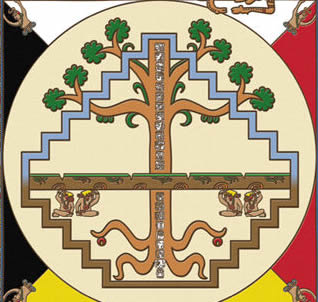
We have been chatting about the Milky Way, and the many things the Mayans saw in it. But in addition to a ball court or a crocodile, the Milky Way is also the World Tree.

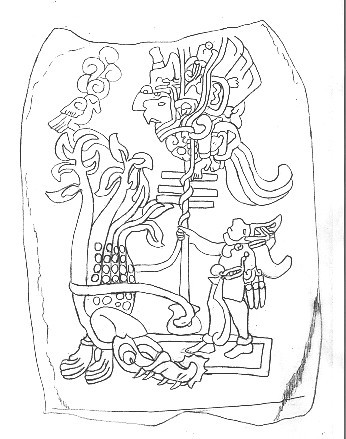
In the Popul Vuh, the World Tree is mentioned as the origin of all life, with the 4 cardinal directions spreading out from it's center.(Many other ancient cultures have a World Tree as a part of their creation tradition). We can think of the great tree as soaring above us, the Milky Way being it's branches. In some legends, there is a great monster in the tree, it's mouth being the Dark Rift. In other versions, the trunk of the ceiba is actually a crocodile, (like a croc, the cieba has rough skin, with thorns found along it's trunk), and its mouth is the Drak rift high in the sky. With a bit of imagination, it is easy to see how the Mayans view the great Milky Way as the collective branches of the tree.


A major element of the World Tree includes the Kawak Monster, a giant head with a kin (symbol) in its forehead.  A bowl on its head contains a flint blade representing sacrifice, and  death.On top of the World Tree we find a bird that has been called, the Principal Bird deity, or Itzam Ye. During the months of winter, when the so-called "Winter" Milky Way dominates the sky, it was called the "White Boned Serpent."  


Soon I will start to pull this symbology together with the Mayan calendar, time and the doomsday. But first I will be spending the next few blogs talking about a new exhibit at the Peabody Essex Museum, which is about the Mayans, and their connection to the sea.


J.T. Turner
Mayanist

Friday, April 2, 2010

The Crocodile in a Tree

Glyph of the sky


Last blog I mentioned that to the ancient Maya, the Milky Way represented a great ball court in the sky. It links back to the creation tales of the Hero Twins. But to the Maya, the Milky Way represented several other things.For example, it was also seen as a great Crocodile, ( or in some translation, a Jaguar/Toad animal).. And the Dark Rift in the Milky Way was called the "mouth of the crocodile". It is often referred to as Hunab Ku, the center of the galaxy.And it is also referred to as xibalba be, the road to the underworld. Passage through the mouth of the crocodile then, was passage to the underworld of the Maya.


(In other cultures, it is viewed as a great serpent eating it's own tail. the Ourobus. And the ancient Greeks looked upon the time cycle displayed by the Milky Way and the Dark Rift as indicating the end of an age, as the Maya did).


The K'iche called this portion of the Milky Way "The Crossroads". They believed that when a planet, or the sun or the moon lined up in the center of the Rift, (in Sagittarius), that it was possible to cross from our world to the Underworld. This spot in the sky happens to be th Galactic Equator, or the center of the Milky Way. And this is key in our Doomsday discussion, as when a planet, sun or moon lines up, a journeyer can pass from our would to another. According to popular theory, on 12/21/12, there is a Galactic Alignment. The Galactic Alignment is the alignment of the December solstice sun with the Galactic equator. This is a rare event occurring on 25,800 years.


Let us appreciate that the Mayan's could find the dead center of the Universe. Truly they were an ancient civilization with amazing comprehension of time and space.


But the key consideration of the Milky Way is the concept that it is the World Tree of the Maya. Indeed the Crocodile symbolism is often called the Crocodile Tree. This is very similar to the World Tree concept that also contains a "monster' in it's branches. So next post, we will look at what the cieba tree means to the Mayans, and then we will look at the World Tree as seen in the Milky Way.


J.T. Turner, Mayanist

Wednesday, March 24, 2010

The Great Road in the Sky


Hello loyal readers! When last we met, I mentioned that I would show you a ball court, or at least where to find one...

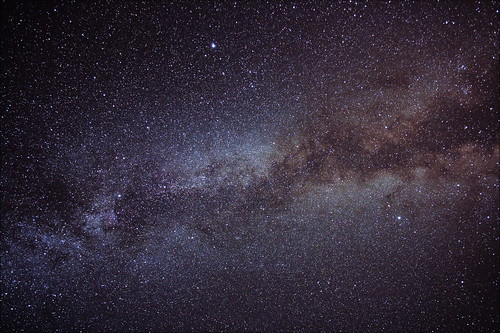
Come outside with me. Yes, yes I know it is the dead of night, trust me it will be worth it. We need the right spot, preferably away from light pollution, outside of cities, as far into the countryside as we can get. Out here away from the glare we can see the stars better.  I want you to look up, and see not just the single stars, but a dense dusting of stars, like a path of spilled milk across the sky. That is the Milky Way. And this amazing sight is the key to a lot of what all the doomsday fuss is all about.

 
Astronomers would tell us that this amazing visual treat is actually a part of the very galaxy our earth is located in. The Milky Way galaxy is called a spiral galaxy, having arms that spiral out from it's center. Earth is on one of the edges of the galaxy, which contains between 200-400 billion stars. It is large beyond belief, 150,000 light years across. Light travels 5,880,000,000,000 miles per year, multiply that by 150,000 and you get the idea, the Milky Way is immense. It is roughly like a flying saucer, with a bulge at its center, and like all Galaxy's is filled with dust, stars and gas. Since we live on an edge, we look across this Galaxy, and that creates the milky road we can see going across the sky. This astronomical feature has had great effect on many of the ancient cultures of the world, especially upon the Mayans.Please note that within it is a dark spot, an opening if you will, called the Dark Rift. To the Mayans the Milky Way and the Dark Rift was several things, including the ball court we spoke of last blog.


Mayans were rather famous for thier ball games. Competing tems played on a ballcourt, trying to get points by driving a ball through a stone ring suspended in the court. So far as we know it was a bit like soccer, no hands were used just the rest of the body. Most famously the losing teams captain was sacrificed to the gods.
Mayan ballcourts were recatngular, had some slanted walls on the sides. Thinking of that shape we can superimpose the structure on the Milky Way, and imagine the Dark Rift as the goal circle.But the Dark Rift, as goal post, is also the entrance to the underworld, called xibalba. We know that the Hero Twins and their Father and Uncle before them, played against the gods in a ball court, and so the Mayans saw this in the night sky. This is a strong connection between astronomy and religion.

I know it is a stretch for us to see a ball court there in the Milky Way, but no more a strecth than seen a hunter, a dipper or a bear. But the Milky Way is more than just a ball court, more on it next blog.

Sunday, March 14, 2010

The Ball Game


                                                        Part of the ball court at Iximche


I have mentioned that the Hero Twins, as well as their Father and Uncle, played the notorious Mayan Ball game. We know less about this game than we do about the Aztec version, but we can make some good guesses. This serves as some background to the astronomical impact of 2012. To recap the legendary portion of the story,

"As the tale goes, the Maize Gods were avid ballplayers who were killed and buried on the court by the Lords of Xibalba (the Underworld) for bothering them with the noise of the game. The head of one of the Maize gods was hung from a tree in the Underworld, and as a daughter of the Lord of the Underworld passes, it spit into her palm, miraculously impregnating her. The daughter bore twin sons, the Hero Twins, who avenge their father and uncle’s deaths by resurrecting them on the ballcourt. The Hero Twins go on to survive the ordeals of Hell presented to them by the death gods, while the reborn Maize Gods remain on the ballcourt for humans to honor. The Maya therefore believed that it was necessary to play the game for their own survival. The ballgame provided an opportunity to show devoutness to the gods by sacrificing captured kings and high lords, or the losing opponents of the game."- William Palmer III Collection, University of Maine Orono

The game was called Pitz, (the actual playing called Ti Pitziil in Classic Maya and Chaaj in K'ich'é ), and had a key role in religious, social and political life. The Ball Court was usually in the great plaza of the city, and was considered a focal point. The Court was in the shape of an "I", with high platforms on each long side, allowing many people to view the game. A solid rubber ball was used, ranging in size from a grapefruit to a melon. The goal was to bounce the ball through stone hoops that hung on the sides of the court. The walls were painted with murals of myths, captives, Kings and animals. There were also movable stone markers (hachas) along the Court, usually depicting animals or skulls.


A movable stone marker


Players were not allowed to touch the ball with their hands, but used the rest of their bodies to keep it in the air, as the ball was not allowed to touch the ground during play. Players wore protective clothing as the ball weighed up to 20 pounds. They also used handstones called manopla to strike the ball.


Like modern ball games, Pitz was played by everyone including women and children. But the Mayans also had major games, often to settle disputes between cities, and captives were often forced to play. There is some evidence that the team leader of the losing team was killed, but that is a rather murky fact. The site authenticmaya.com tells us: The game between competing teams of players could symbolize the battles between the gods in the sky and the lords of the underworld. The ball could symbolize the sun. In some of these ritual games, the leader of the losing team would be decapitated, and  His skull would then be used as the core around which a new rubber ball would be made.  A common interpretation would emphasize the Venus cycle and the Maize God death-and-resurrection myth as core religious aspects of the game. The ancient Maya are believed to reenact, through the ball game, the mythic Underworld contest between the gods of life or fertility and the gods of death. 


Part of the Ball Court at Tikal


But you need not travel to Guatemala nor Mexico to see a Ball Court. Next post, I will tell you where you can find one......


J.T. Turner, Mayanist

Tuesday, March 9, 2010

Popul Vuh

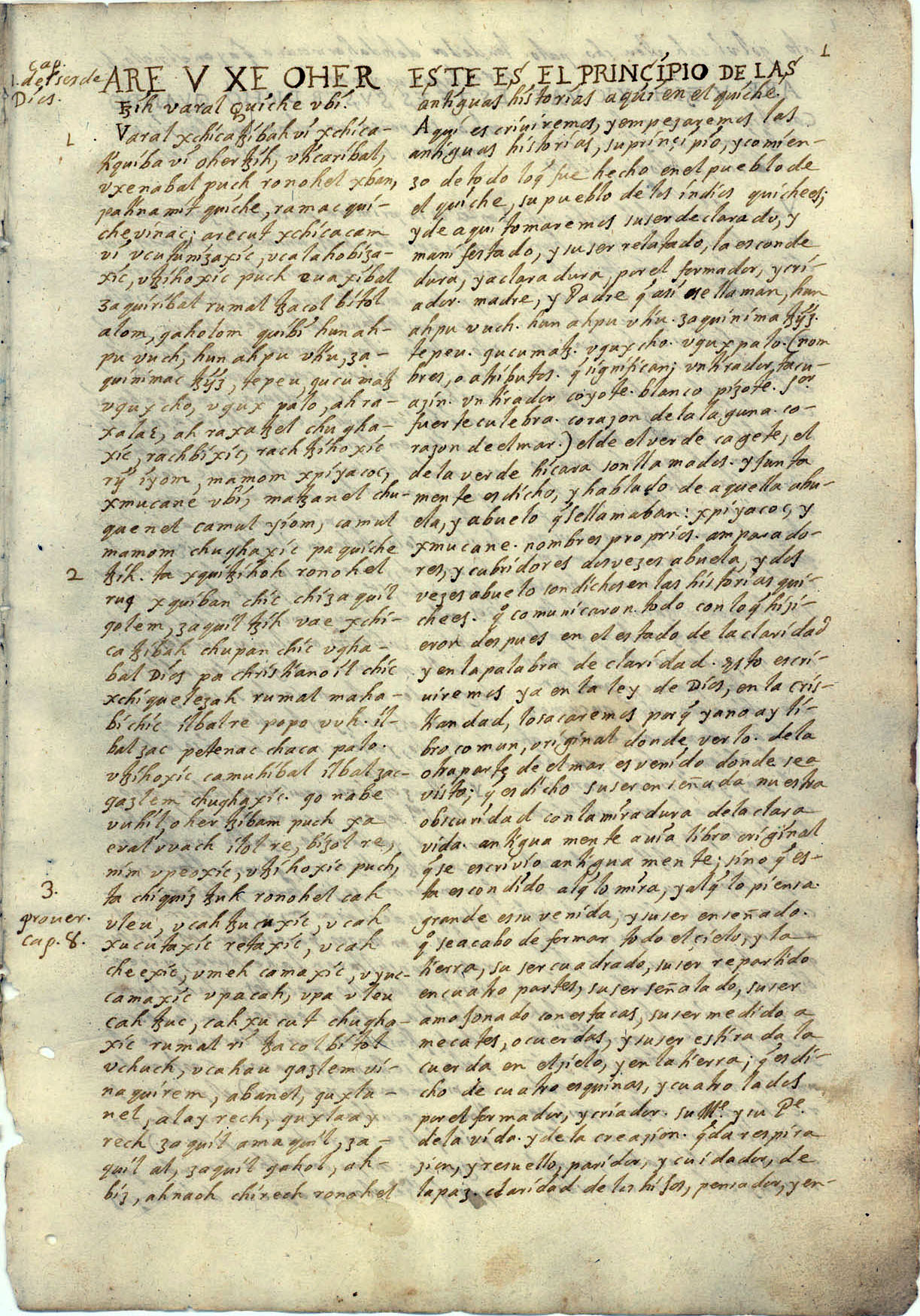
File:Popol vuh.jpgAn original page from the Popol Vuh Translation, about 1701

As we discuss the Maya, and the Doomsday Date of 12/21/2012, it makes sense to touch on an important book, the Popul Vuh.

Much of what we know about the Mayan creation theory/myth come to us from this book. When the Spanish invaded the Mayan Kingdoms, many of the Mayan books were burned as a part of the process to convert them to Catholicism.The books were considered pagan in nature, and so tragically destroyed. One book that was destroyed was called the Popul Vuh. It gave the mythistory (yes, that is a word) of the Quiche Kingdom in the Guatemalan Highlands. It is known that most other Kingdoms shared this book's beliefs. But didn't I say it was destroyed? Yes, it was, but a Quiche convert to Catholicism recreated it in Spanish, and it was transcribed and translated by a Dominican, Francis Ximenez.  .

A literal translation of Popul Vuh is "book of the mat", as the original was made of tree bark. But the general translation is accepted as "Book of the Community or Council". It has the stories of the creation of the world, and of man. Also the story of the "Hero-Twins" Hunahpu and Xbalanque, who play a major role in the creation myth. They were ballplayers, as were their Father,  Hun Hunahpu, and Uncle, Vucub Hunahpu, before them.


File:Izapa stela25.jpgThe Twins shooting a Bird Deity

Summoned to Xibalba, the Underworld, for playing ball too loudly, (oh shades of my own youth!), by the Lords of the Underworld, the father and uncle were defeated by one of the Lords' tests and sacrificed and Hun Hunahpu's skull was suspended in a trophy tree. When the daughter of one of the lords of Xibalba, approached this tree, the skull spat into her hand and thereby made her pregnant with the Hero Twins. The Twins grew up to avenge their father, and after many trials, finally defeated the lords of the Underworld in a ballgame. The Popol Vuh features other episodes involving the Twins as well (see below), including the liquidation of a pretentious bird demon, Vucub-Caquix, and of his two demonical sons. The Twins also removed their half-brothers from the scene, turning them into Howler Monkeys who were the patrons of artists and scribes. The Twins' final transformation into sun and moon establishes a metaphor for rule over earth and sky.


OK, so who cares? Well as we consider Mayan myths, the Hero Twins come into play again and again, and show how important Ball playing was in Mayan society. And when we discuss the Doomsday Date, the Ball Court plays an important role.

I should also mention that the Popol Vuh gives genealogies of the gods and the eventual rulers of Quiche. Of course many other kingdoms may have had variations in the legends, but based on various stone carvings, we know they were all similar to what we read in the Popul Vuh.

Next Up, The Mayan Cosmos.

J.T. Turner
Mayanist